Side A · Desirable and conceivable
A future you want to live in.
What is better about your life in 2050? What did we change to get there? You do not have to imagine a perfect world.
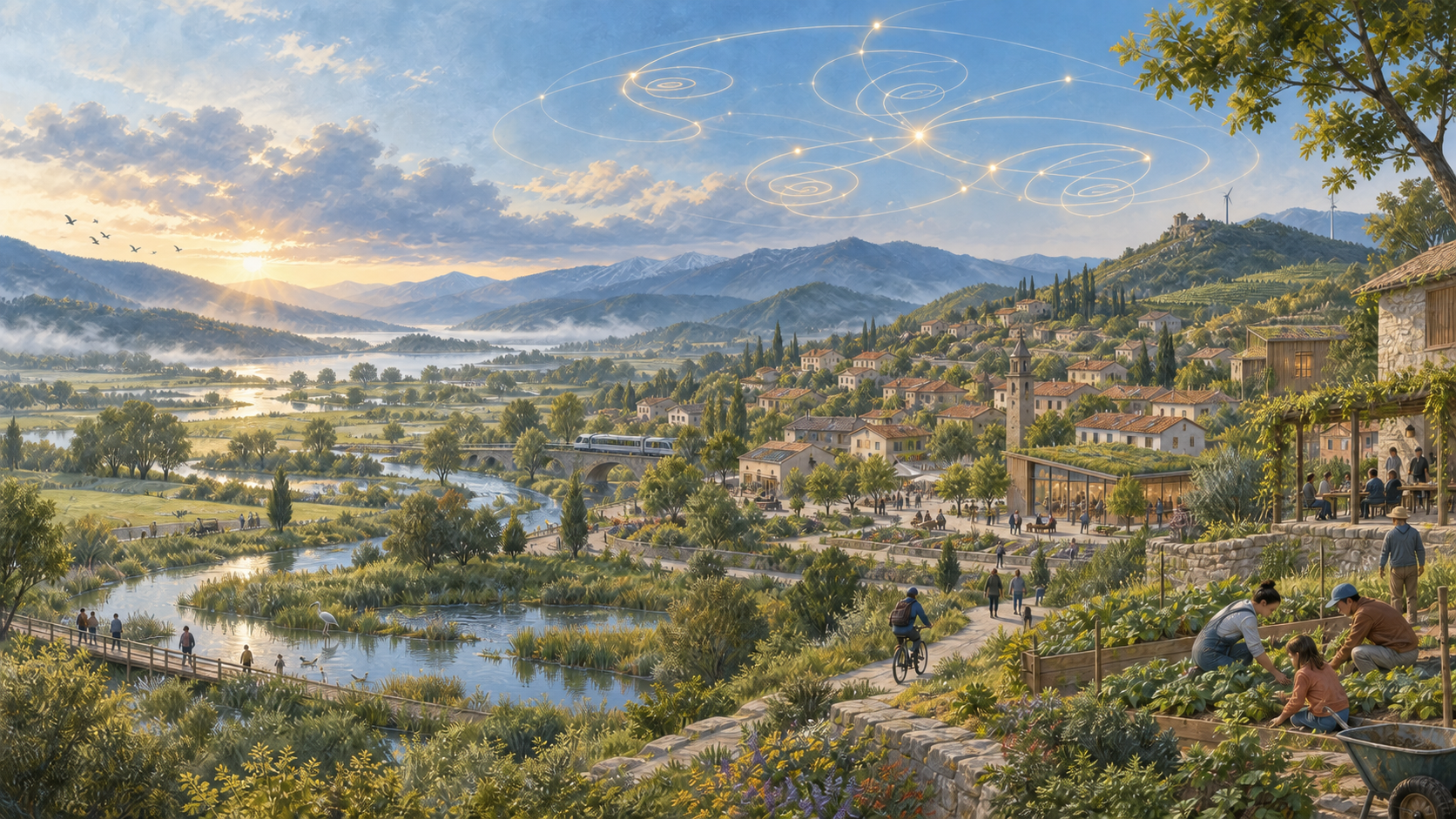
Worldwide participatory democracy. Now.
Courage is not about denial, denying ourselves, or forcing ourselves to stay longer in a dead end. It is about facing reality, recognising that we have reached the end of this road, and organising what comes next.
Let us name the lives we want to live — and make them happen.
RESET 2050 proposes that we organise today around the Constellation: a shared framework bringing together the Doughnut’s social foundation of human dignity and planetary boundaries with the psychological and sociological dimensions of our choices.
2050 is not a date to begin. It is a horizon for results.
A first act: tell a story of the world you want to inhabit — and the one you fear.
A dream. An idea. A trend. A social phenomenon. An action plan. A reality.
Until early 2027, we invite your stories to help shape a book and the development of the RESET 2050 organisation. You do not need to be a writer or agree with all our proposals.
15–30 min · At least 300 characters per side · For adult participants
Beta version · edition 0.22 · October 2026
The starting point: your imagination
A child aged 5 in 2026 will be 29 in 2050. For that child, this world will not be fiction: it will be everyday life. Many of us will be living in it too. This future is not someone else’s.
We spend a great deal of energy denouncing what we no longer want, often in social media comments. Energy that dissipates and can leave us exhausted without moving us forward. Let’s devote as much to naming what we do want — and to building it.
Naming the lives we want and the futures we fear is the very least we can do to begin taking back control. Writing alone will not change the world. But this exercise brings us face to face with our desires, our fears, and what we are — or are not — willing to give up.
Giving ourselves this time and treating it as important is a first milestone. Tell a possible life story, Side A and Side B, even — and especially — an imperfect one.
The Eisenhower matrix distinguishes urgency from importance. For RESET 2050, imagining our future and taking part in shaping it are both. Sides A and B are a first practical exercise, not a test of anyone’s worth as a citizen.
| Our priorities | Important | Less important to our purposes |
|---|---|---|
| Urgent | Meeting essential needs and responding to crises. Taking part in collective decisions: starting here with our Sides A and B. | Requests, notifications and controversies that demand a reaction without serving what matters to us. |
| Without an immediate deadline | Protecting time over the long term to learn, care, deliberate and build. | Activities we can postpone or give up, without confusing rest with wasted time. |
Finding this exercise difficult may tell us something about our ability to imagine the future and what holds us back. It does not, on its own, measure our capacity to act. People also need time and the means to participate.
Choose yourself, someone close to you or a fictional character. Take us into their everyday life: places, meals, work, relationships, joys and difficulties.
Side A · Desirable and conceivable
What is better about your life in 2050? What did we change to get there? You do not have to imagine a perfect world.
Side B · Worsening trajectories
What does that same day look like if we let the difficulties deepen? Keep it concrete; you do not have to write a catastrophe.
Your stories will contribute to an evolving map of how we imagine the future: discovering what brings us together, understanding our differences, and informing the book and the development of RESET 2050. You do not have to think like its author. This collection is neither a representative survey nor a vote of endorsement.
Your stories · Until early 2027
Five steps: your contact details, side A, side B, optional background questions for mapping, then your choices about use. You remain the author of your text; the proposed uses, including commercial uses, are set out in the agreement before submission. No story is published automatically.
Your draft stays in this browser until you submit it. You can review your choices before sending.
English pilot interface. The contribution agreement and the privacy notice are currently available only in French. The English form does not replace those documents. Please do not submit unless you understand them; contact ggr@reset2050.org if you need an English version.
Contribution saved
Keep this contribution code:
Your stories have been saved. You can now consider five proposals about work, food, housing, wealth and economic rules, then suggest a question for other participants.
Continue my contribution — optionalYour personal link will also be in your receipt: keep it to return within 90 days. Do not share it. No automatic email is sent.
The receipt contains the versions of the documents accepted and a fingerprint of your choices. No story is published automatically.
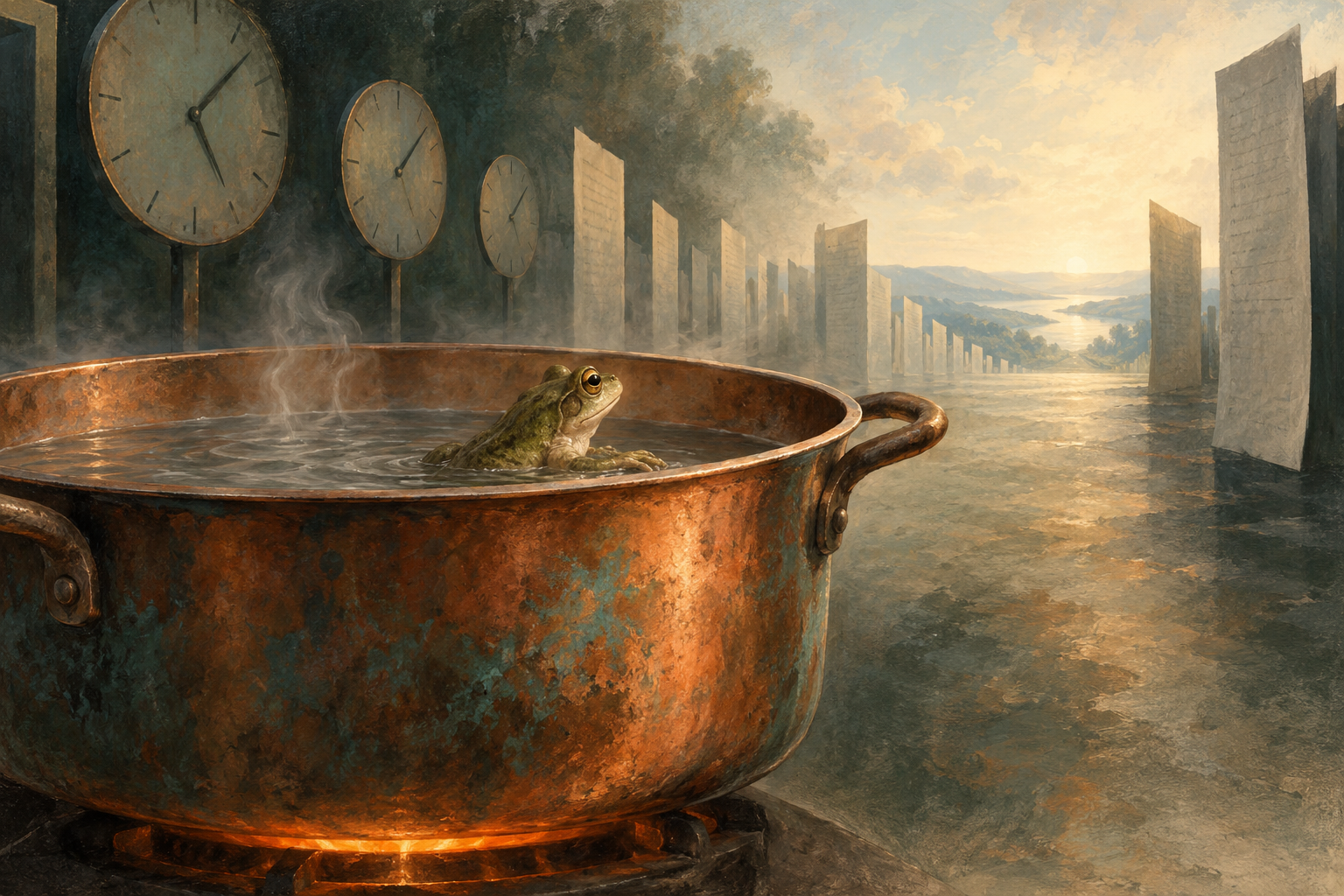
The water heats up. We get used to it. Afraid of uncertainty, we defend a familiar discomfort. We call what harms us normality, and staying in it responsibility.
Being an adult means facing things as they are, whether we like them or not. Understanding them. Drawing the consequences. Then building a way out and a project we can name.
We can change financial rules. We invented them. We cannot vote to abolish physical limits.
The party of endless abundance is over for most of us. Yet those who constrain us, keep us in place and divide us still defend their right to ever more. That is the question: who gives things up, and for whose benefit?
There is no question of giving up the joy of living. Time is our most precious possession: the time we live, not the time we spend waiting to live. A finite world does not mean an end to humanity’s possibilities.
We still have the realms of curiosity, knowledge, encounter and creation to open up. These are ways to realise the best of our humanity.
Taking initiative in a finite world means accepting limits and building within them. Regaining independence, the ability to act and collective maturity. Accepting the necessary efforts and things to give up, with the real means to do so.
Time for democracy cannot be whatever is left after everything else. Asking people to participate is not enough. They must have the time and the means to do so.
The ambition of RESET 2050
Imagine a visitor from elsewhere. They would discover a humanity capable of exploring space, understanding some of the mechanisms of life and communicating almost instantly across the planet. What would they make of our difficulty in protecting the conditions of our own existence together?
They would see borders, concentrations of power and inequalities determined at birth. They would hear us present rules we have created as inevitable. They might ask us: why does the way you organise your lives together endanger what makes those lives possible?
In many works of fiction, the threat comes from elsewhere. What if the mirror pointed back at us? We do not need an alien invasion to put our world at risk. Responsibility is not shared equally, but we can change how we organise our lives together. We can also be the ones who protect, repair and invent.
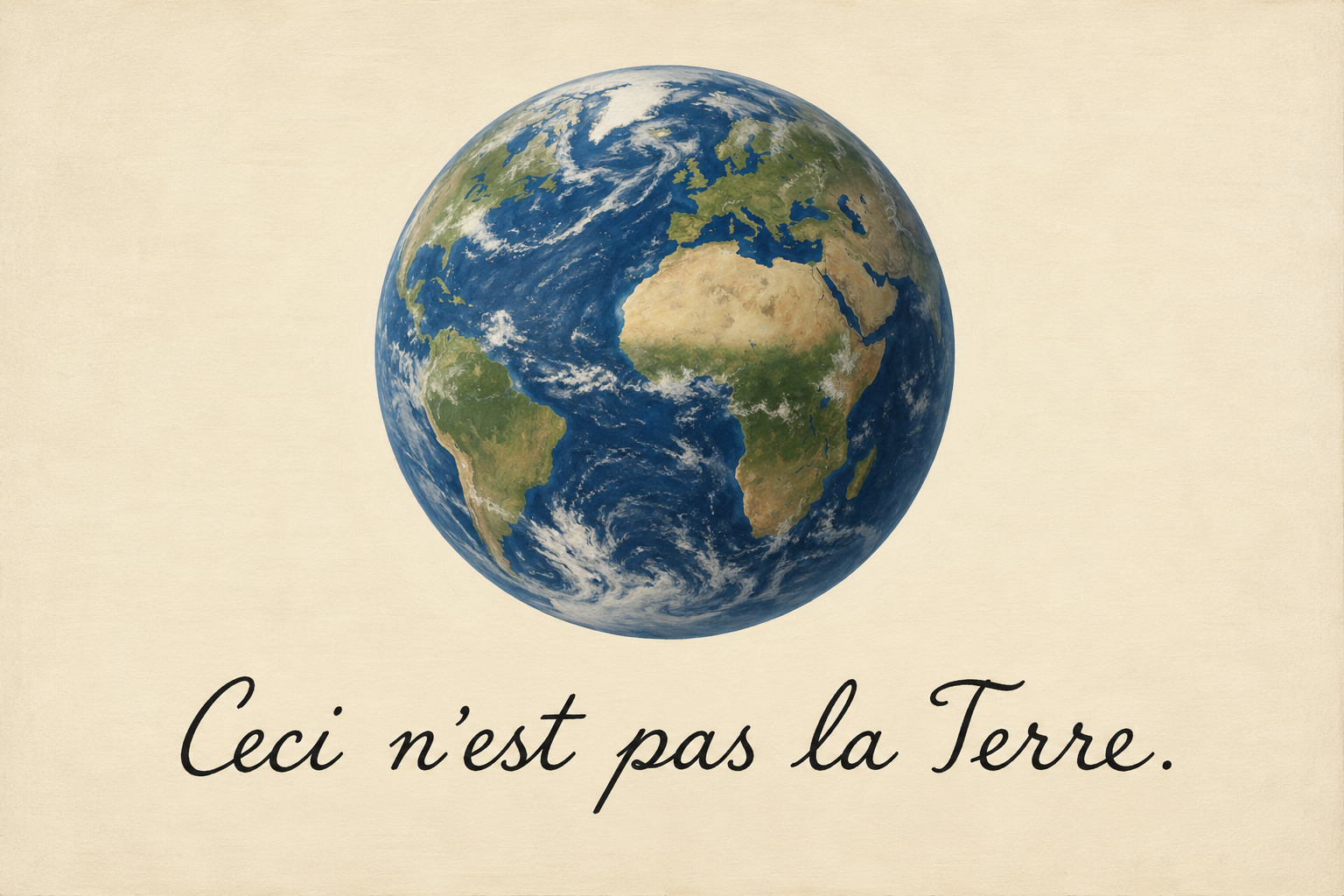
The unity we stand for is not uniformity. It does not ask us all to believe the same things or give up our cultures. It asks us to recognise our interdependence and act on it: protect our shared home, guarantee everyone’s dignity and genuinely share decision-making.
Inherited political categories must not become the boundaries of our imagination. We can learn from the past without giving it a monopoly on what is possible.
We believe the time has come for a worldwide participatory democracy. A democracy in which power will be neither a career, nor an inheritance, nor the property of a few.
The Constellation is our proposed framework for approaching it: connecting planetary boundaries, the conditions of human dignity, and the psychological and sociological forces behind our choices. Learn, decide, act, evaluate and revise: a method with a universal and emancipatory ambition, to put the economy back at the service of humanity’s future.
The common good belongs to no political camp: it concerns the world, all its citizens, all living beings and their future. We want democracy to set the goals and rules of the economy, not the other way round.
The aim is to gradually replace professional, career politics in every country with informed, pluralistic, temporary and accountable citizen representation. Through democratic and non-violent means, connecting local initiatives with shared decisions at a planetary scale.
Our shared future is not the property of any leader, party or fortune. It is up to us to take collective responsibility for it again.
2050 is not a date to begin. It is a horizon for results.
We were not born to live in fear.
To regain security, a measure of ease and the joy of living — and make them accessible to those who have never had them.
Break the cycles of fear. Not by ignoring dangers, but by organising together to address them.
How have we turned a world so full of possibilities into such a fragile present and such an anxiety-provoking future? We can learn, create, care and cooperate. Why accept a system that traps us in competition, insecurity and the search for enemies?
We see two warning signs converging: growing pressure on the world’s physical balances and democratic backsliding, alongside the normalisation of radicalising and authoritarian rhetoric. These dynamics are distinct, but their coexistence makes action more urgent. Our response to this reckless course: more reason, cooperation and shared power — not less freedom.
Ecological reference · Stockholm Resilience Centre, 2025 ↗Democratic reference · V-Dem, 2026 report ↗
RESET 2050 springs from indignation at democratic decline and the worldwide spread of mediocracy: communication treated as competence, careers placed above the common good, and winning power confused with the ability to exercise it. A present that feels like an accumulation of dystopias cannot pass for a shared vision of society. Changing the faces is no longer enough: we must rethink the system from the ground up.
RESET 2050 aims to tackle the challenges of the present and the future. The first runs through all the others: bringing about a worldwide participatory democracy, based on a proposed shared framework, named here the Constellation.
Let go of confrontations between political camps so we can put our energies into building, with awareness and conviction. Without erasing disagreements: it will take work, choices and things we choose to forgo, discussed as widely as possible and guided by principles with a universal purpose. Neither decisions nor our shared future should be appropriated by a few.
In the lead-up to the book’s intended publication in early 2027 and the launch of the organisation, this page gathers your stories to inform the book. It also aims to raise awareness of RESET 2050 and open discussion of its foundations, including through diverse media around the world. These connections have yet to be built.
This page deliberately does not set out every practical detail: it invites us to examine the direction before collectively deciding the paths to take. It does not ask you to endorse a programme that is already set in stone. The book will develop the proposal; the organisation should enable people to discuss it, test it and contribute to it. Not everything is resolved.
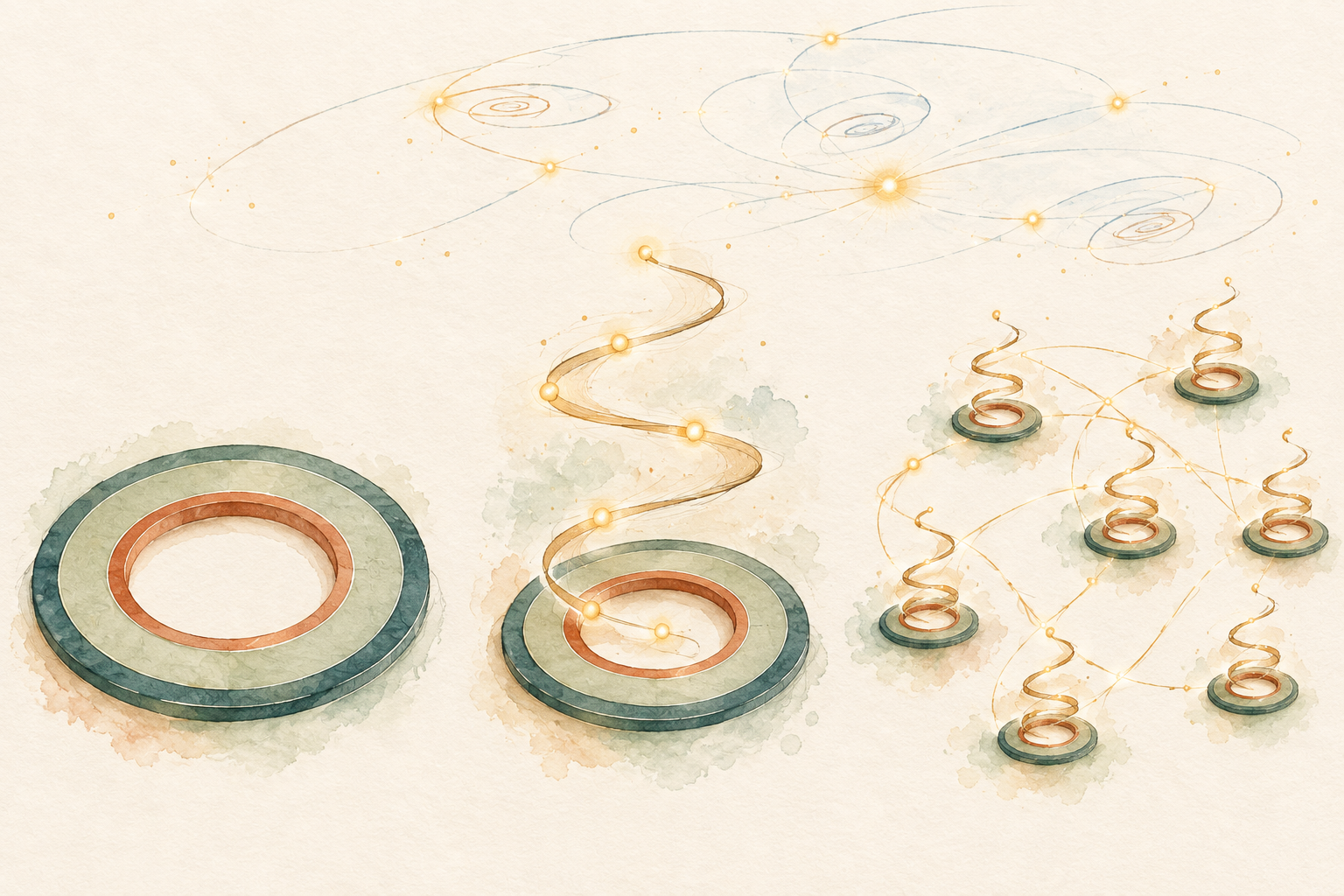
A social foundation of human dignity, an ecological ceiling of planetary boundaries: the space in which to build our lives.
Experiences, encounters and learning over time. A richer life through more than accumulation.
Distinct paths that meet, cooperate and contribute to shared decisions.
A framework under development: Kate Raworth’s Doughnut — a social foundation of human dignity and an ecological ceiling of planetary boundaries — enriched with psychological and sociological dimensions to understand our beliefs, interactions and ways of deciding. Time runs through it all.
Learning, testing viewpoints against evidence, deciding, evaluating outcomes and revising: a method that serves people, not a single prescribed way of thinking. The Constellation is RESET 2050’s proposal, not a scientifically validated model as a whole.
The Doughnut · Kate Raworth / DEAL ↗Planetary boundaries · Stockholm Resilience Centre ↗The Constellation in the story
Georges Grosjean, an engineer and entrepreneur, initiated the book and RESET 2050. The book is his personal work; the organisation is intended to grow beyond its founder.
“RESET 2050 began with bewilderment that turned into indignation: how can we demand so much competence in our professional lives and so little accountability from those who decide for us? I refuse to let our future be taken out of our hands. This opinion piece explains why I want to contribute to a worldwide participatory democracy — and why I invite you to imagine, tell stories and help build what comes next.”
Read my opinion piece (in French): “The future of peoples belongs to the peoples”
AI supports the writing, research and structuring of the project. It replaces neither source verification nor human judgement. An AI-generated answer is not evidence.
“I initiated this book and RESET 2050. Artificial intelligence helps me explore knowledge, structure ideas, write and create materials. I advocate a more measured world while using a technology that contributes to the contradictions I challenge: material costs, dependencies, concentration of power and risks. I accept this choice and its paradox: AI enables me to make progress on a project whose scale exceeds my current resources. This does not resolve the contradiction or exempt me from examining its effects and alternatives. It remains a tool, not an answer to everything. I remain responsible for the proposals I retain, which must be tested against other perspectives.” — Georges Grosjean
“My paradoxes are not limited to AI: they run through my background, my circumstances and the options open to me. They are no less defensible than many others, including those of the ruling class I criticise. But theirs do not resolve mine. More paradoxes lie ahead, for me and for our societies. I refuse to wait for perfect consistency before acting, while remaining accountable for my choices. Our time is limited. We must move forward now, acknowledge our contradictions and work to reduce them along the way.” — Georges Grosjean
Contributions inform the thinking without any guarantee of inclusion in the book.
Clear directions. Ways forward to build, debate and test together. The constellation connects choices with their consequences.
Participation must no longer be what is left after everything else. Create protected civic time, with the means to learn, deliberate and act.
RESET. Only acts matter.
More channels are not enough if control stays in the same hands. Limit concentration and protect editorial independence, including from those who might support us.
RESET. Only acts matter.
Open decision-making to prepared citizens with time and resources. Establish temporary mandates, checks and balances, and accountability that does not end at elections.
RESET. Only acts matter.
Begin a coordinated, verifiable reduction in armaments, working towards the abolition of armies built for war. Build common security and repurpose resources, without abandoning people under threat.
RESET. Only acts matter.
Reduce consumption that exceeds the limits of the living world, starting with excess. Support people whose livelihoods depend on activities that need to change.
RESET. Only acts matter.
Welcome support, including from wealthy people, without selling control of the project. Funding must buy neither decisions, nor veto rights, nor exemptions from shared rules.
RESET. Only acts matter.
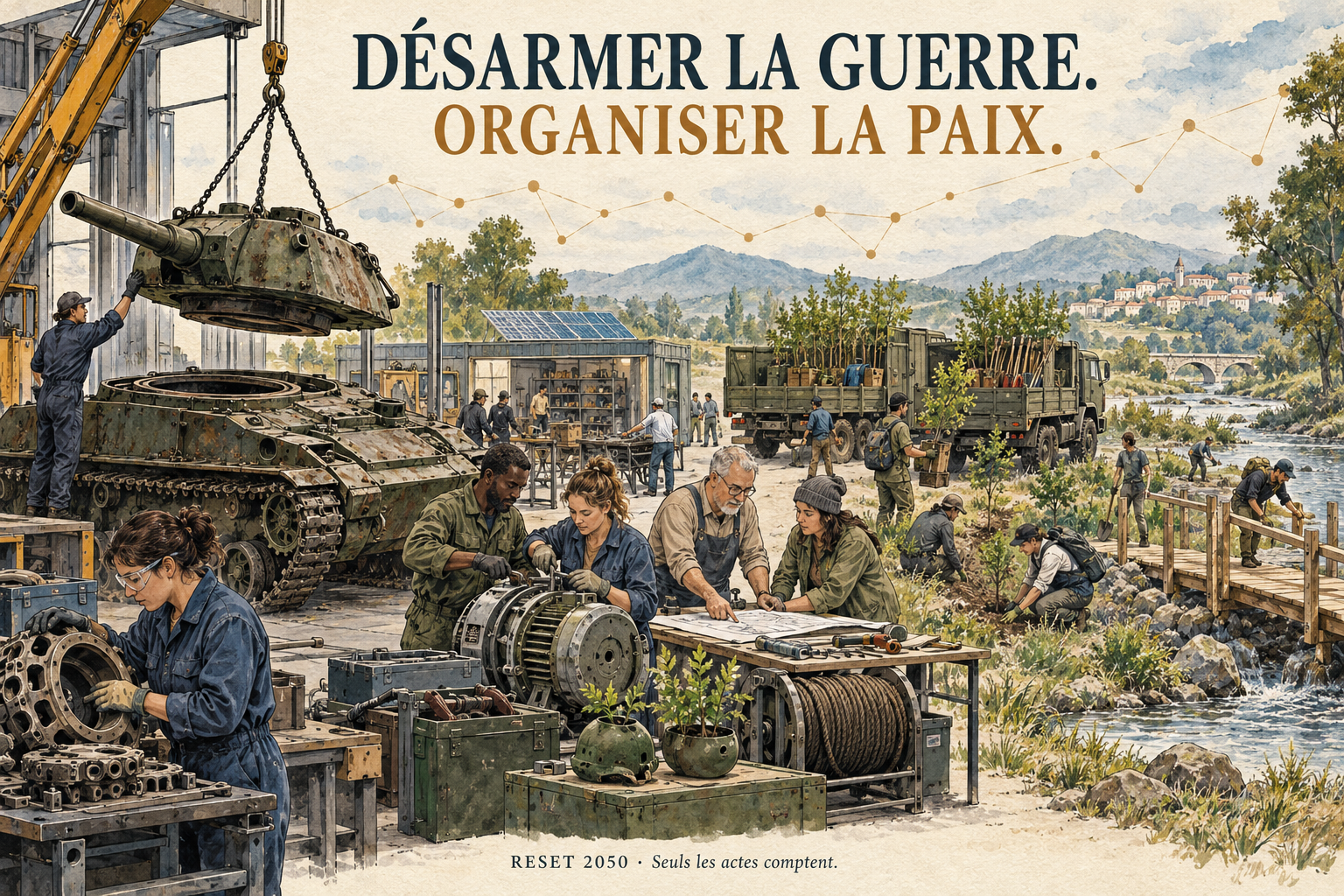

Do these proposals speak to you, challenge you or inspire others? Give them an everyday life. Tell us about a day in 2050: the world you want to live in, and the one you fear.
Contributing does not mean endorsing every proposal.

A responsibility, not a pedestal.
A temporary mandate has a place in a life; it takes over neither that life nor power.
Meet Fatima in Georges’s story ↗“Stupidity is laziness.”
Our response: make room for curiosity, then nurture it. Learn, meet others, question and act. Do not confuse exhaustion with laziness: regaining time and security also means regaining the means to participate.
Understanding constraint does not erase responsibility. Being exhausted, anxious or mistreated gives no one the right to dehumanise anyone else. Precarity does not excuse fascistic behaviour. Prosperity even less so.
Reject fatalism. Reclaim the ability to shape our lives, in the time we have left. For ourselves and for those who follow us.